News
Aotearoa New Zealand's rate of emissions reduction needs to more than double
14 July 2026
- Our 2026 emissions reduction monitoring report has just been released.
- Aotearoa New Zealand’s emissions are gradually falling, but progress stalled in 2024.
- The pace of emissions reductions needs to more than double over the next few years; and to get on track for that, action is needed within the next 12–24 months.
- Risks to Aotearoa New Zealand’s climate goals for the next decade have increased. The second and third emissions budgets are at high risk, and the 2030 biogenic methane target is unlikely to be met.
- Our report highlights practical opportunities to reduce emissions and manage future costs, including low-emissions technologies that are already cheaper over time in some households and businesses uses.
- The Government has low-cost options to reduce barriers that are preventing businesses and households from choosing low emissions technologies.
Current policy won’t deliver what’s needed, and the window to get on track is closing
Aotearoa New Zealand’s emissions are falling, but not fast enough to meet the country’s climate goals, according to the Climate Change Commission’s annual emissions monitoring report, released today. The report finds progress stalled in 2024, and the rate of emissions reduction will need to more than double over the next few years to get back on track.
Jo Hendy, Chief Executive of the Climate Change Commission, says:
“This is a clear warning sign. Emissions are gradually falling but progress stalled in 2024, and current policy settings are not delivering at the pace needed. Government choices in the next 12–24 months will be critical to getting the country back on track.”
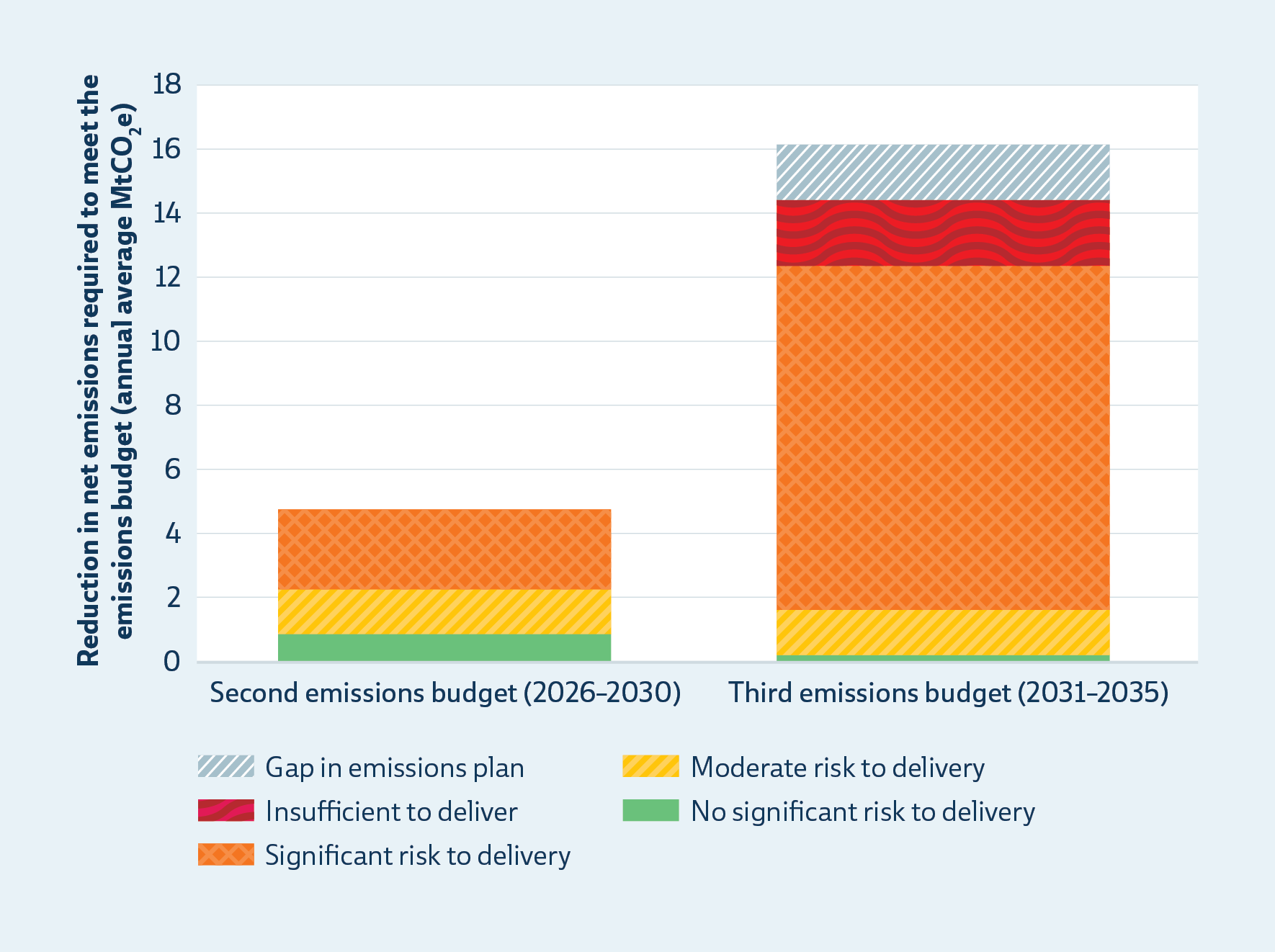 The second emissions budget (2026-2030) is at significant risk under current policies and plans – and this risk has increased in the last year.
Source: Commission analysis
New Zealanders are already experiencing the impacts of a changing climate. Choices made now will affect how quickly the country cuts its own emissions, and how well households, businesses and communities are positioned to manage future shocks.
Accelerating decarbonisation can save money and manage future risks
For some common household and business uses, low-emissions choices are already cheaper over time. Electric vehicles, solar and heat pumps can reduce running costs, lower exposure to volatile fuel prices, and make homes and businesses more resilient to future shocks.
The Commission’s report highlights practical examples where available low-emissions technologies can reduce costs:
- EVs are cheaper to run than petrol vehicles, and upfront costs have dropped. For comparable compact SUVs, EV owners can save about NZ$7,500 over five years.
- In parts of Australia (where about a third of households have solar), rooftop solar and battery systems are helping reduce regulated electricity prices by up to 10%.
- It’s now generally cheaper for businesses to buy and run a new industrial heat pump than continue running a fossil-fuel low-temperature boiler.
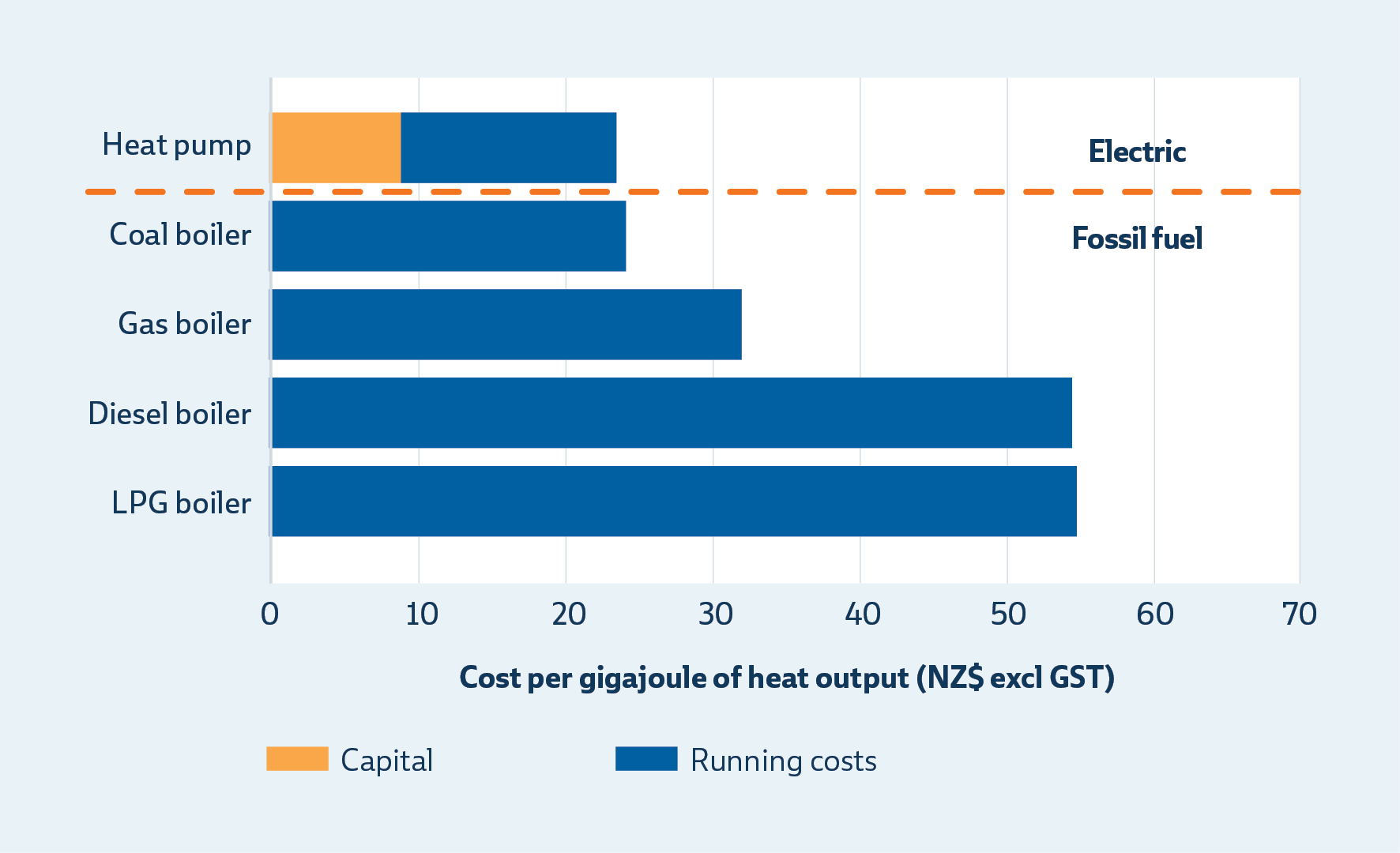
Cost of installing and running a new heat pump compared with running existing fossil fuel boilers.
Source: Commission analysis
Separately, research released earlier this year by the Sustainable Business Council and Climate Leaders Coalition estimated that earlier decarbonisation could contribute NZ$22 billion per year to GDP in less than a decade.
“But roll-out in Aotearoa New Zealand is lagging. This isn’t just a missed opportunity to reduce emissions, it means that households and businesses may be paying higher energy costs than they need to. Slow or delayed action also restricts the country’s future options,” says Hendy.
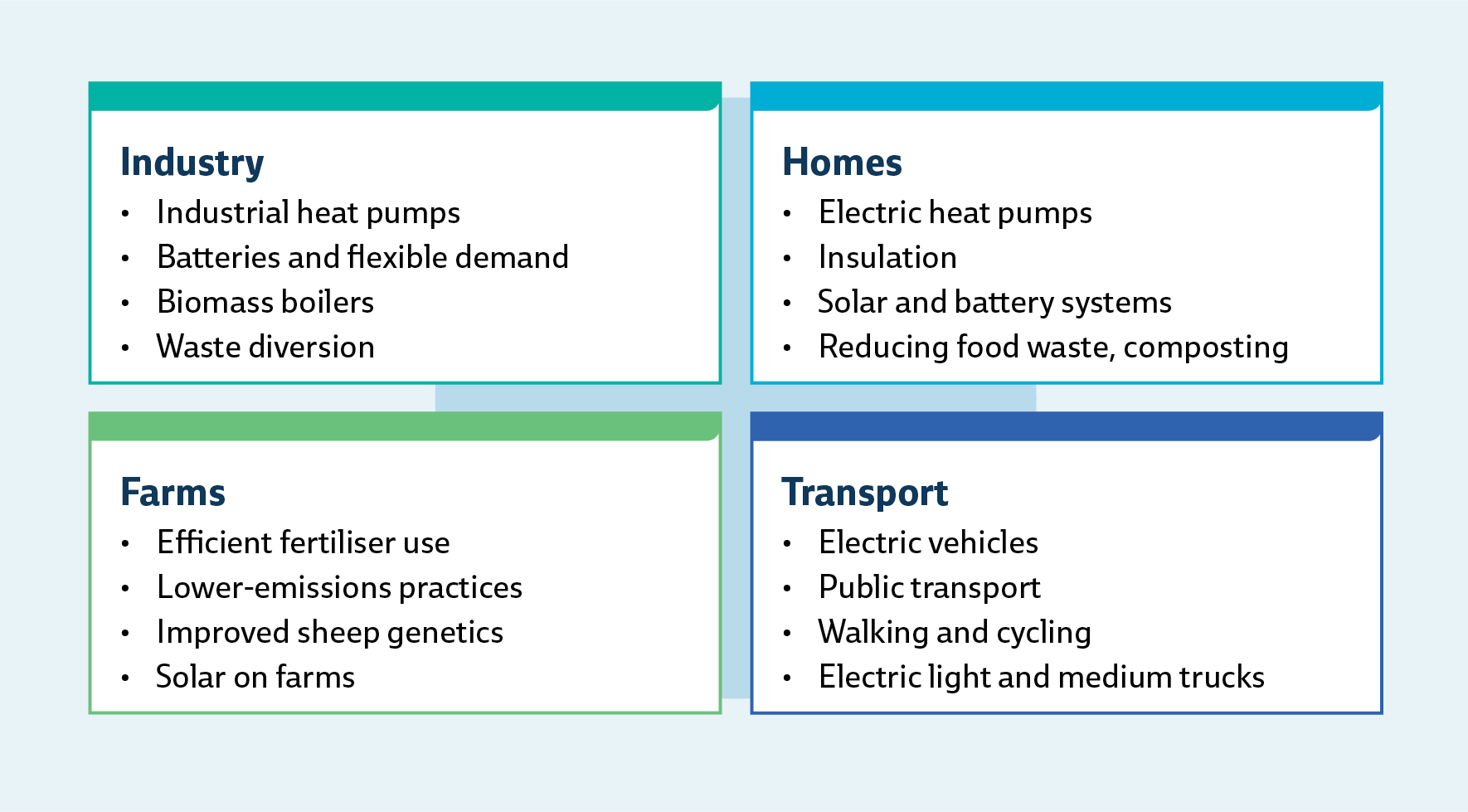
There are actions with clear benefits for households and businesses to adopt now.
Source: Commission analysis
The Government has low-cost options to address barriers
People are missing out on savings and reducing their exposure to future energy risks because upfront costs and other barriers prevent households and businesses from switching away from fossil fuels.
The Government has low-cost options to address these barriers. These include targeted funding and financing mechanisms, stable investment signals for markets and consumers, and better information to support household and business decisions.
“The Government has already taken useful steps to reduce upfront cost barriers, including low-interest loans for EV charging and the gas transition loan scheme. The question now is how to build on them quickly enough to support the scale of change needed,” says Hendy.
“It’s not just about what the Government spends money on, but also the signals it gives. Clear and stable policy settings help households, businesses and investors make decisions with confidence. The goal should be to avoid getting locked into expensive long-run options. Infrastructure and other long-lived investments that support low-emissions choices are generally cheaper to get right early than to retrofit later,” says Hendy.
More info
Explore the full monitoring report, along with the modelling and data that underpins it, a range of summaries for different sectors and audiences, and other resources.
Read more about this kind of report.
Join us online to learn more about this report: